Kia ora, tena koutou katoa.
(Māori: Greetings, hello to you all.)
Most of my clients are repeat customers who like my style and the type of service and product Tutus with Aroha offers.
When they see the range of costumes from traditional tutus to the crazy colour-blocked Lycra wonders I make, people are often wowed and amazed by how things come together, especially if sewing is not their thing.

Lately, I have been thinking more about how to explain when I know something is right visually. For a long time, I would play with appliques, lace, stones etc., until it felt right. But why did it? What was it about how I put it together that made it right or wrong to my eyes? And even more importantly, what would it look like on the stage and to other people?
My family used to ask me,
"But how do you know?"
My family used to ask me, "But how do you know?" and honestly, I didn't know. I just knew I had to keep playing until it was right. It was like an 'ah ha' moment when it all fell into place. I remember doing this with two tutu bodices early on. I went back and forth for days. Now I look at them and think I was so naive. So what changed?
Now I think about costumes like a painting, photograph, floristry, or music. Some things represent light and dark, space, and equilibrium in each of these other art forms. Paintings have backgrounds and foregrounds and different textures to balance. Photography is similar. It can look great, until you change it to black and white, and then it can be all wrong again. Floristry (along with lots of other things) uses the ideas of unequal numbers, always using 3, 5, or 7 of each flower. And music? Well, sometimes the best parts are the rests where things are silent and calm.
Many of these concepts derive from the Golden Ratio (or Golden Section, among other names).
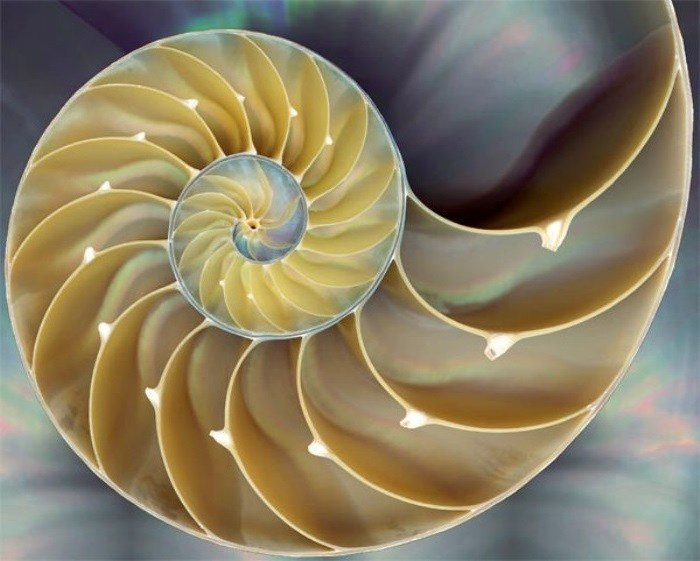
The Nautilus shell is the popular iconic image for a logarithmic spiral. It is also frequently cited as an example of a golden ratio logarithmic spiral in nature.
Is it a coincidence that all of these art forms have something in common? Not at all. Many of these concepts derive from the Golden Ratio (or Golden Section, among other names). This mathematical ratio, commonly seen and used, was first studied by Ancient Greek mathematicians. It is found in nature and often represented by the Fibonacci spiral.
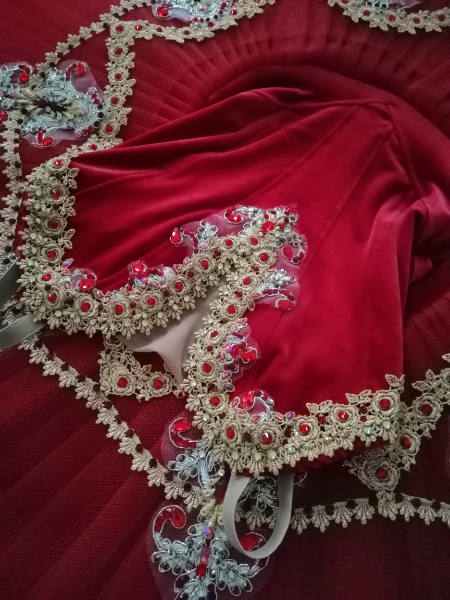
So how does this translate to a costume you want to wear on the stage? Let's start with some of the basics.
-
-
- The coverage of lace and other fabrics compared with plain fabric. Think texture versus no texture. Is it balanced to the eye from up close and further away?
- Stones - Are you only using a single colour? If so, are you using different shapes and sizes to create texture? If you are using many colours, do they create depth and shadowing versus light and sparkly? (I know, this sounds crazy, they all sparkle, but they can catch the light in different ways.)
- Shapes across the body - do you have enough to create balance? I often look for areas that compliment each other on the diagonal of the body, e.g. going from shoulder to opposite hip.
- Skin - this can be used as a balancing tool as well. Consider it another fabric. Just as photographers talk about using the fraction of thirds to balance landscapes and other shots, I use thirds frequently to balance costumes on bodies. It is an ongoing game of ratios.
-
I find that:
-
-
- Tutu skirts look best covered either one third, two thirds, or fully covered.
- Lyrical skirts seem to work best at mid-thigh or just below the knee.
- Armbands cover a third of the upper arm from shoulder crest to elbow.
-
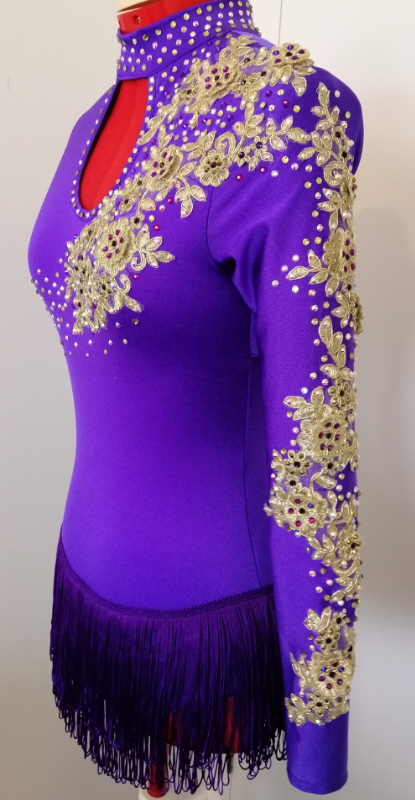
When I’m putting together a costume, I am already thinking about ratios, thirds, the Golden Ratio, coverage, and balance right at the beginning of the design process.
When a client asks me to make changes, I’m always thinking about how this will affect the balance of the costume and what else might need to change.
Is this what everyone does? I don't know, but it is a way to explain what I do, which helps create costumes that all look similar and develop the brand as a recognisable entity, just the same way as I can look at some costumes and know who has made it without being told.
Funny how starting to think about these things makes me conscious of every decision I make. But more importantly, it gives me a language I can use with clients and an understanding of what is missing and how to fix this quickly and efficiently.
So, from one little costume maker at the bottom of the world to everyone who reads this, I hope that gives you a little more insight into my costume making mind.
Te pai katoa - All the best
Debbie
Tutus with Aroha
I'd like to thank Debbie for her guest blog post and I hope it has helped you with your design process.
If you would like to write a blog post for Pink Giraffe, drop me a line with your idea. I am currently looking for submissions from people who run a sewing business (doesn't have to be dance costumes) and would like to share your stories with others.
You can contact me by email.